
India possesses two months of fuel stockpiles and faces no supply concerns despite global energy disruptions, according to Oil Minister Hardeep Singh Puri. However, state-run fuel retailers are incurring losses of up to Rs 1 lakh crore in a single quarter due to elevated crude prices and unchanged retail fuel prices, raising questions about the sustainability of these losses.

Calling such reports baseless, Finance Minister Nirmala Sitharaman said there was no such move under consideration.
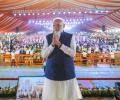
This is the time for India to plan forward fully, with the goal of Atmanirbharata, and energy security. The Persian Gulf is no longer a reliable source, points out Rajeev Srinivasan.

India has no plans to ration fuel supplies despite ongoing disruptions in global energy markets, according to a top oil ministry official. The country has maintained adequate inventories of crude products and LPG while diversifying imports to manage supply risks.
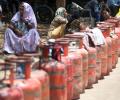
Maharashtra minister Mangal Prabhat Lodha defends his request for LPG cylinders for Jain temples, claiming criticism is part of a larger anti-Hindu narrative.

India's wholesale price inflation surged to 8.30 per cent in April, up from 3.88 per cent in March, primarily driven by a significant increase in the prices of fuel, power, and crude petroleum, according to data from the commerce and industry ministry.

Indian oil marketing companies are incurring significant losses, selling petrol at a Rs 14 per litre loss and diesel at Rs 18 per litre, as elevated global crude oil prices, exacerbated by the West Asia crisis, outpace capped retail fuel rates, according to rating agency Icra.

Trinamool Congress leader Abhishek Banerjee accuses the central government of withholding funds from West Bengal to punish voters for supporting the TMC, while highlighting state-led initiatives to support the population.
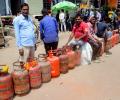
The Indian government has implemented several measures to mitigate external risks, support the balance of payments, and maintain macroeconomic stability amidst the ongoing West Asia crisis, according to Minister of State for Finance Pankaj Chaudhary.

Companies are already diversifying sourcing, raising prices, and reworking operating models as the disruption drags on.

The Indian government has increased import duties on gold and silver from 6 per cent to 15 per cent to curb inbound shipments of precious metals amid a rising import bill due to the West Asia crisis.
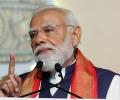
Prime Minister Narendra Modi has urged for restraint in the use of petro products due to the West Asia crisis, emphasising the need to save foreign exchange and reduce the impact of war. He also highlighted India's progress in solar power and ethanol blending, while assuring support to Telangana's development.

When missiles fly in this region, they are never just aimed at military targets.

'The West Asia or the Gulf crisis has shown that what we develop as national infrastructure when things are not as bad as they could be, we forget to plan for adversities.'

India significantly increased piped natural gas (PNG) connections in March as the government accelerates the expansion of cleaner fuel networks amid global supply disruptions.

Who says saving fuel has to be a daunting or boring task? You can have fun while doing it. How? Let's find out!

An India-flagged LPG tanker, Jag Vikram, has successfully crossed the Strait of Hormuz following a temporary ceasefire between the United States and Iran, marking a significant development for India's energy security.

The Indian central government has reduced its total expenditure by approximately 60,000 crore in FY26, below its revised estimate, to successfully achieve the fiscal deficit target of 4.4 per cent of gross domestic product (GDP), according to the latest data from the Controller General of Accounts (CGA).

There is no cause for concern, as the overall situation arising out of the crisis is firmly under control, the Centre informed while briefing political parties at the all-party meet.

The Indian government has issued a stern warning to industrial users who are reportedly procuring cheaper retail fuel instead of industrial-grade fuel, leading to significant losses for state-run oil marketing companies (OMCs) and potential local shortages. This diversion, driven by a substantial price difference between retail and bulk diesel, is adversely impacting OMCs, which are absorbing daily losses of approximately 550 crore to keep retail prices stable.

The proposed facility seeks to simplify and speed up PF withdrawals by allowing Employees' Provident Fund Organisation (EPFO) subscribers to access up to 75 per cent of their balance through ATMs and UPI-based systems, while retaining at least 25 per cent in their accounts.

India on Friday launched a highly coordinated, priority operation to safely guide 13 Indian-flagged commercial vessels out of the volatile Strait of Hormuz, the ministry of ports, shipping, and waterways announced on Friday.

The announced election schedule for five assemblies reveals fewer phases, a condensed voting period, longer gaps between polling days, and a delayed counting process compared to previous elections.

'We have lost 70-80 per cent of our business from foreign guests.'

The Indian government has reassured citizens that the country has sufficient reserves of petrol, diesel, and LPG, and that refineries are operating at high capacity despite global supply chain disruptions. They have urged citizens to avoid panic buying and hoarding.

The Indian government has increased measures to secure fuel and gas supplies following the Strait of Hormuz closure, urging citizens to avoid panic buying. Refineries are operating at high capacity, and sufficient stocks of petrol and diesel are available nationwide.
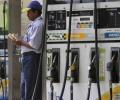
Responding to concerns raised by Leader of the Opposition Rahul Gandhi in the Lok Sabha, Petroleum Minister Hardeep Puri said it is the foremost priority of the government that the kitchens of over 33 crore families, especially the poor and the underprivileged, do not face any shortage of gas.
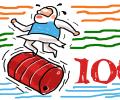
'Once the currency goes out of the hand, then possibly your major challenge is that it will not come back.'

India's retail inflation marginally increased to 3.4 per cent in March, up from 3.21 per cent in February, primarily due to an uptick in certain food items and the initial impact of the West Asia crisis on fuel prices, according to government data.

Prime Minister Narendra Modi has begun a six-day tour of the UAE, the Netherlands, Sweden, Norway and Italy to strengthen bilateral relations amid geopolitical challenges. The trip will focus on energy security, trade, and technological cooperation.

India's foreign secretary Vikram Misri on Thursday participated in a high-level meeting hosted by the United Kingdom on the evolving situation in West Asia, underlining concerns over maritime security, energy supply disruptions and the need for diplomatic de-escalation.

'There is no shortage of fuel whatsoever.' 'India is stock surplus as far as petrol and diesel are concerned.'
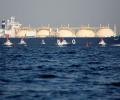
Analysts predict India will face oil price volatility and macroeconomic effects due to the escalating Iran crisis, though the country's oil supply chain is not yet structurally insecure.

Voters in Kerala, Assam, and Puducherry are voting in crucial assembly elections.
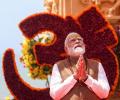
'At the first sign of real trouble, that money will move. There will be a run.'

Indian-flagged vessels are navigating the Strait of Hormuz safely despite ongoing tensions in the region, ensuring the continued flow of vital energy supplies to India.

TMC leader Abhishek Banerjee has accused the BJP of misusing democratic institutions and stoking communal discord in Bengal, criticising their 'double engine' governance model.

Prime Minister Narendra Modi addressed the Lok Sabha on the West Asia crisis, expressing concern over its impact on the global economy and assuring the safety of Indian citizens in the region.
Prime Minister Narendra Modi addressed the Lok Sabha on the West Asia crisis, expressing concern over its impact on the global economy and assuring the safety of Indian citizens in the region.

If TVK MLAs and ministers are perceived as clean, or demonstrably cleaner than their predecessors, the credibility dividend will be enormous. The voter will feel rewarded, points out Ramesh Menon.
